

The fastest, most durable way to grow an AI newsletter is to build a referral loop, put fresh issues in front of the right small audiences on purpose, and let AI generate and test subject-line variants continuously. Watch click-to-open rate and reply rate as your honest engagement signals, not raw opens, and treat deliverability as the ceiling on everything else you do. Get those three right and growth stops feeling random.
TL;DR:
- Focusing on click-to-open rate and reply rate gives a clearer picture of actual engagement than open rates, which are now unreliable due to privacy protections.
- AI can generate effective referral incentives, lead magnets, and platform-specific content, but tracking which channels sustain long-term subscribers is essential for scaling.
- Testing subject lines and preheaders with AI across different registers boosts open rates, while segmentation improves engagement without risking trust through over-personalization.
- Ensuring proper email deliverability via SPF, DKIM, DMARC, and slow volume ramp-up prevents spam filtering and maintains list growth.
- Early signals such as reply rate and opt-in rate, rather than subscriber count, are key indicators of a successful, sustainable newsletter growth strategy.
Table of Contents
- AI-augmented tactics for organic subscriber growth
- Producing content that keeps people opening and replying
- Deliverability basics that keep growth from backfiring
- Tools and workflows that speed up creation and testing
- How this plays out for affiliate marketers building a list
- Sustainable growth beats vanity metrics
- Try a guided pilot with Will Buckley’s playbooks
- Where to verify the technical details
- Sources
- FAQ
AI-augmented tactics for organic subscriber growth
Referrals still outperform almost every paid channel for newsletters, because a recommendation from someone you trust carries more weight than an ad ever will. Set up a simple two-sided reward: the referrer gets early access to a resource or a small bonus, and the new subscriber gets something useful on arrival. Ask AI to draft three versions of the referral invite (short and direct, story-based, curiosity-driven), then send each to a slice of your list and keep the version with the best reply rate.
A referral message worth testing looks like this: “You’ve been reading for a while, so I wanted to ask a favor: forward this to one person who’d actually use it. They’ll get our AI prompt pack free just for signing up.”
Lead magnets are where AI earns its keep fastest. You can generate a usable asset in an afternoon instead of a week:
- A five-day micro-course delivered as short daily emails.
- A swipe file of ten prompts tied to your newsletter’s niche.
- A one-page checklist that solves a single, specific problem your reader has right now.
Package the magnet behind a simple landing page with one clear promise, not three vague ones. The narrower the promise, the higher the opt-in rate tends to run, because the reader knows exactly what they’re getting before they hand over their address.
Distribution matters as much as the content itself. Each platform rewards a different voice, so don’t post the same paragraph everywhere:
- On X, lead with a single sharp insight and let the newsletter link ride underneath it.
- On LinkedIn, frame the same insight as a short lesson with one concrete example.
- On Reddit, skip the pitch entirely and answer the question directly. Link only if a moderator or the community norm allows it.
- On Discord, drop into the conversation first and mention the newsletter only when it genuinely answers what someone asked.
Ask AI to draft a version for each platform from one core idea, then edit for voice before you post. This is the fastest way to multiply reach without multiplying your workload, and it pairs well with the automation recipes in AI workflow automation for affiliate marketers.
Your long-form content is another growth engine sitting mostly unused. Take a blog post, ask AI to generate three angle variants for a newsletter version (a how-to angle, a contrarian angle, a personal-story angle), and turn one post into three separate issues over a month. Add one clear call to action per issue, pointing to your signup page or a related resource, and keep it to a single ask.
Cross-promotion with adjacent newsletters is underused because it feels awkward to pitch. It doesn’t have to be. Pick five newsletters with an audience close to yours but not competing directly, offer a straightforward swap (you mention them, they mention you, same week), and propose specific copy so there’s nothing for them to write. A partner resource on proven email list growth strategies covers additional channel plays worth testing alongside these.
Pro Tip: Track which channel actually drives signups that remain subscribed for a meaningful period., not just which one drives the most clicks.
Producing content that keeps people opening and replying
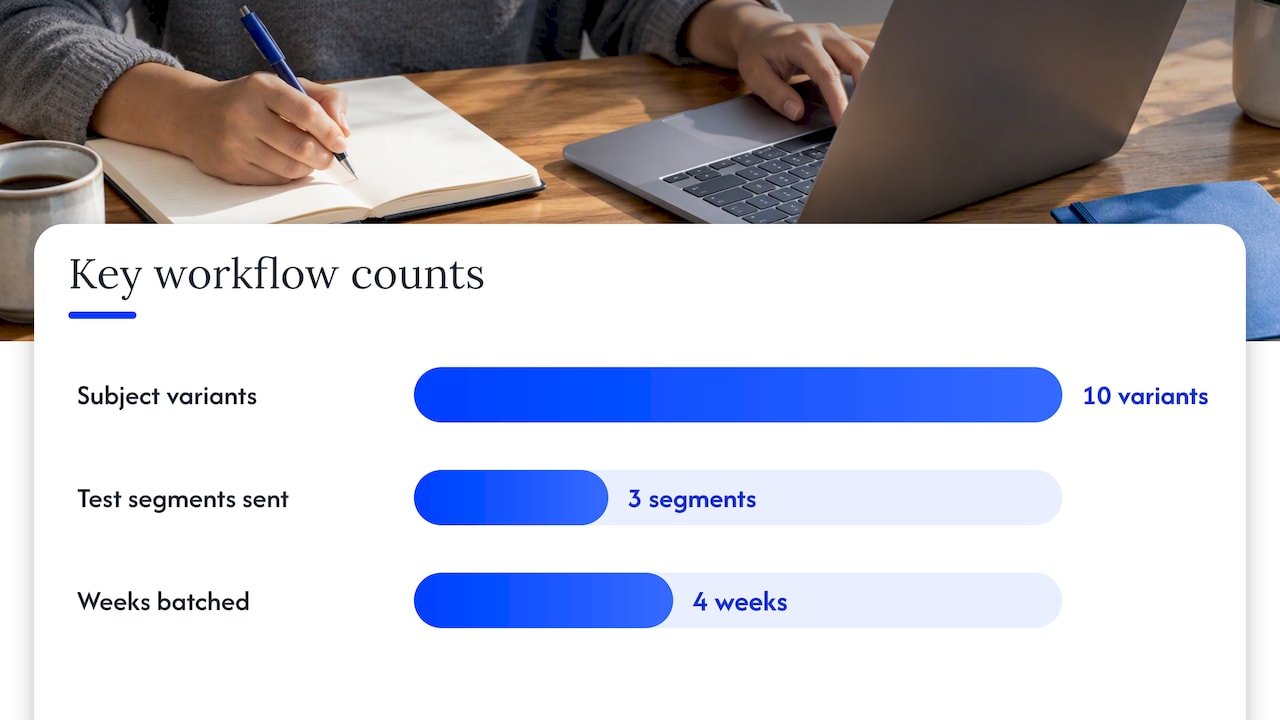
Subject lines are worth more testing time than almost anything else you write, because they decide whether the rest of your work gets read. Build a simple prompt template: give the AI your issue’s core idea, ask for ten subject-line variants in different registers (curiosity, direct benefit, question, number-led), then send three of the strongest to small, even-sized segments of your list before you pick a winner for the full send. The same approach works for preheader text, which most creators ignore entirely.
Personalization helps, but only to a point. Segment-level personalization, where you tailor content by interest or behavior group, tends to lift engagement reliably. Hyper-personalization, where every line is rewritten per individual based on granular behavioral data, risks the opposite effect: research on generative AI in marketing personalization finds that AI-personalized email can increase clicks and conversions, but excessive personalization risks reducing trust. instead of building it. The practical fix is to personalize by segment, test the result, and keep a human reviewing anything that reads as invasive rather than helpful.
A note on your real engagement numbers: Apple Mail Privacy Protection has made open rates unreliable as a measure of genuine interest, since it can register an open automatically without a person ever seeing your email. Click-to-open rate and reply rate are harder to fake and tell you far more about what’s actually working.
The metrics worth building your dashboard around:
- Click-to-open rate (CTOR): shows whether the people who did open found something worth clicking.
- Reply rate: the strongest signal you have that someone is genuinely engaged, since replying takes real effort.
- 30-day activation: whether a new subscriber opens and clicks at least twice in their first month, which predicts long-term retention better than day-one opens.
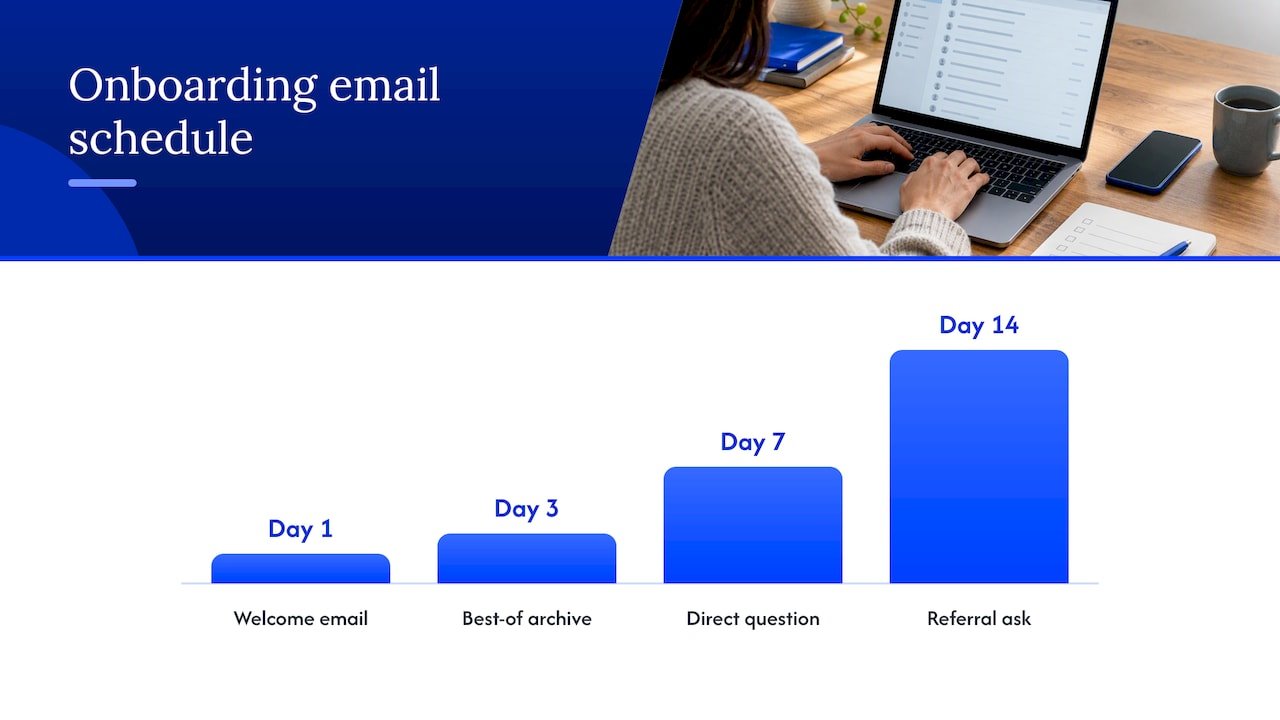
A simple onboarding sequence to raise that 30-day activation number: welcome email with one clear promise on day one, a best-of-your-archive email on day three, a direct question asking what they want more of on day seven, and a lightweight referral ask by day fourteen, once they’ve had time to see value.
Deliverability basics that keep growth from backfiring
None of this matters if your emails land in spam. Growing your list faster than your sending reputation can support is one of the most common ways creators sabotage themselves.
- Set up SPF, DKIM, and DMARC on your sending domain, and confirm all three pass with your email service provider’s testing tool.
- Add a one-click List-Unsubscribe header, which Gmail’s sender guidelines require for bulk senders and which meaningfully reduces spam complaints.
- Check Gmail’s bulk-sender FAQ for current spam-rate thresholds and mitigation eligibility before you scale volume.
- Ramp new sending volume slowly and watch Google Postmaster Tools for reputation drops rather than jumping straight to full-list sends.
- Suppress hard bounces and unengaged addresses regularly, and honor every unsubscribe immediately.
| Requirement | What it covers | Why it matters |
|---|---|---|
| SPF, DKIM, DMARC | Domain authentication | Confirms you’re a legitimate sender, reducing spoofing risk |
| List-Unsubscribe header | One-click opt-out | Required for bulk senders, lowers spam complaints |
| Gradual volume ramp | Sending pace for new IPs or domains | Protects sender reputation while scaling |
| Spam-rate monitoring | Ongoing reputation tracking | Keeps you eligible for inbox placement |
Platforms differ in how well they support these features out of the box. If you’re choosing or switching senders, the comparison in best newsletter platforms for creators walks through which ones handle List-Unsubscribe and authentication cleanly. For deeper reputation monitoring, the deliverability guidance at Notix is a useful technical reference.
Tools and workflows that speed up creation and testing
You don’t need a large stack, just the right categories covered: a subject-line and copy generator, a scheduling tool with send-time optimization, a segmentation or personalization engine, and something to generate simple header images. Layering more tools on top rarely improves output once those four boxes are checked.
A workflow worth copying is a three-step testing pipeline. Generate ten subject-line variants for one issue, send three to small even segments of your list (aim for statistically comparable group sizes), and roll the best performer out to everyone else within a few hours so the send window stays fresh.
Batching pays off fast: write four weeks of newsletter issues in one sitting by feeding AI your best-performing older posts and asking for fresh angles on each, then schedule them in advance and spend your saved time on distribution instead.
- Keep a short brand lexicon and a do-not-say list so AI drafts don’t drift into claims you can’t back up.
- Always have a human read the final draft before it sends, especially anything mentioning numbers or guarantees.
- Store your best-performing prompts so testing gets faster with every issue, not slower.
Pro Tip: Run your testing pipeline on the same day each week so you build a comparable data set instead of one-off snapshots.
The prompt-engineering workflow at cut draft time with prompt engineering has ready-to-use templates for this exact pipeline.
How this plays out for affiliate marketers building a list
A realistic four-week pilot looks like this: week one, build one lead magnet and set up the referral loop; week two, seed the newsletter across two or three community channels; week three, run subject-line and copy variant tests on live sends; week four, scale the winning variants and test a small monetization offer against the warmed-up list.
Watch for early signals rather than waiting for big subscriber numbers: rising reply rate, opt-in rate on the lead magnet page, and referral shares are the clearest signs the loop is working before revenue shows up at all.
- The AI content strategy 90-day rollout maps a longer version of this pilot for readers who want the full sequence.
- Guidance on keeping AI drafts sounding like you, not like a template, lives in humanize AI content.
Sustainable growth beats vanity metrics
A list of ten thousand names that never opens anything is worth less than a thousand people who reply. Chasing subscriber counts feels productive, but qualified signups and real 30-day activation are what eventually pay the bills.
Automation should handle volume, not voice. The moment a subscriber can tell a human isn’t behind the words, trust erodes faster than any growth tactic can rebuild it.
If you want to see whether a small paid pilot fits your list before committing further, that’s worth exploring next.
— Will
Try a guided pilot with Will Buckley’s playbooks
An experienced coach teaches affiliate marketers how to fold AI into repeatable marketing systems instead of one-off experiments, and newsletter growth is one piece of that. If you’d rather follow a built playbook than assemble one from scratch, the real affiliate marketing case study data breaks down what a working funnel looks like end to end.
- You get a step-by-step playbook, not just principles.
- Templates for referral messages, onboarding sequences, and subject-line prompts are included.
- There is an option for readers who want direct feedback rather than trial and error.
Check the YouTube automation affiliate marketing launch playbook if you’re ready to put a structured plan in motion.
Where to verify the technical details
For the authentication and unsubscribe rules that govern deliverability, Gmail’s sender guidelines and its accompanying bulk-sender FAQ are the primary references. For why open rates alone mislead, see the analysis of Apple Mail Privacy Protection’s impact on email marketing, and for research on AI personalization’s effect on trust, see the generative AI and consumer perception study.
Sources
FAQ
Are newsletters still relevant in 2026?
Yes. Email remains one of the few channels a creator fully owns, unaffected by algorithm changes on social platforms, which makes it a durable place to build a direct relationship with an audience.
What is the 30% rule for AI?
There’s no single agreed-upon “30% rule” for AI in marketing or newsletters. If you’ve seen the term used, it likely refers informally to a personalization or automation threshold specific to one company’s internal guideline rather than an industry standard.
Which jobs will not survive AI?
No source in this article addresses long-term job displacement by role, and any specific list would be speculation rather than fact. What’s clear from the personalization research cited here is that human review still matters in AI-assisted marketing work, since over-personalized content can reduce trust if left unchecked.
Is AI overhyped in 2026?
AI’s value in newsletter growth is real but narrow: it speeds up variant generation and testing, not judgment or relationship-building. The research on AI personalization shows genuine gains in clicks and conversions, alongside a clear warning that unchecked automation can backfire, which suggests the honest answer is calibrated optimism rather than hype or dismissal.
How do I know if my subject-line testing is working?
Look at click-to-open rate on each variant rather than opens, since open-rate data has become less reliable since Apple Mail Privacy Protection rolled out. A consistent lift in CTOR across several tests, not just one lucky send, is the signal that your subject-line approach is actually working.