

Audit your entire site now, delete or noindex thin and templated pages, and rebuild what remains with first-hand testing, visible author identity, and honest methodology. Recovery typically takes months, not weeks, so watch Search Console for sitewide drops in impressions and clicks, and flag any section where a notable share of pages look low-value. That ratio is usually the first thing worth fixing.
TL;DR:
- Thin and templated pages, especially those with high ad or affiliate link density, should be deleted or noindexed to improve sitewide rankings.
- Building trust signals like visible author bios, “how we tested” sections, and clear affiliate disclosures supports recovery from Google’s continuous helpful content classifier.
- Audits should score pages using multiple signals like word count, media, updates, and traffic drops, prioritizing red-score pages for immediate removal or improvement.
- Recovery involves a phased approach: removing low-value content in the first two months, rebuilding with original testing and author identity over months 2-8, and restructuring content into topical hubs later.
- Using AI-assisted workflows for auditing and content deepening accelerates recovery, but human testing and judgment remain essential for effective results.
Table of Contents
- Recovering From the Helpful Content Update Affiliates Face
- Why Affiliate Sites Took the Hardest Hit
- How to Audit and Triage Every Affiliate Page
- The Recovery Roadmap: What to Do Month by Month
- The E-E-A-T Signals Worth Adding Right Now
- Fixing the Technical and UX Signals That Quietly Hurt You
- What Recovery Actually Looked Like for Publishers Who Fixed It
- Your Copy-Paste Audit and Template Checklist
- Lessons From Coaching Affiliate Publishers Through HCU
- How Willbuckley Helps You Run This Playbook Without Guesswork
- Sources
- FAQ
Recovering From the Helpful Content Update Affiliates Face
The Helpful Content System launched in August 2022 as a standalone classifier aimed at content written for search engines instead of people. It rolled through several refreshes before Google folded it directly into core ranking systems on March 5, 2024, alongside new spam policies targeting scaled content abuse and site reputation abuse. That merger matters more than most affiliate marketers realize: helpfulness stopped being a periodic update you wait out and became a continuous, sitewide signal baked into how Google ranks everything you publish.
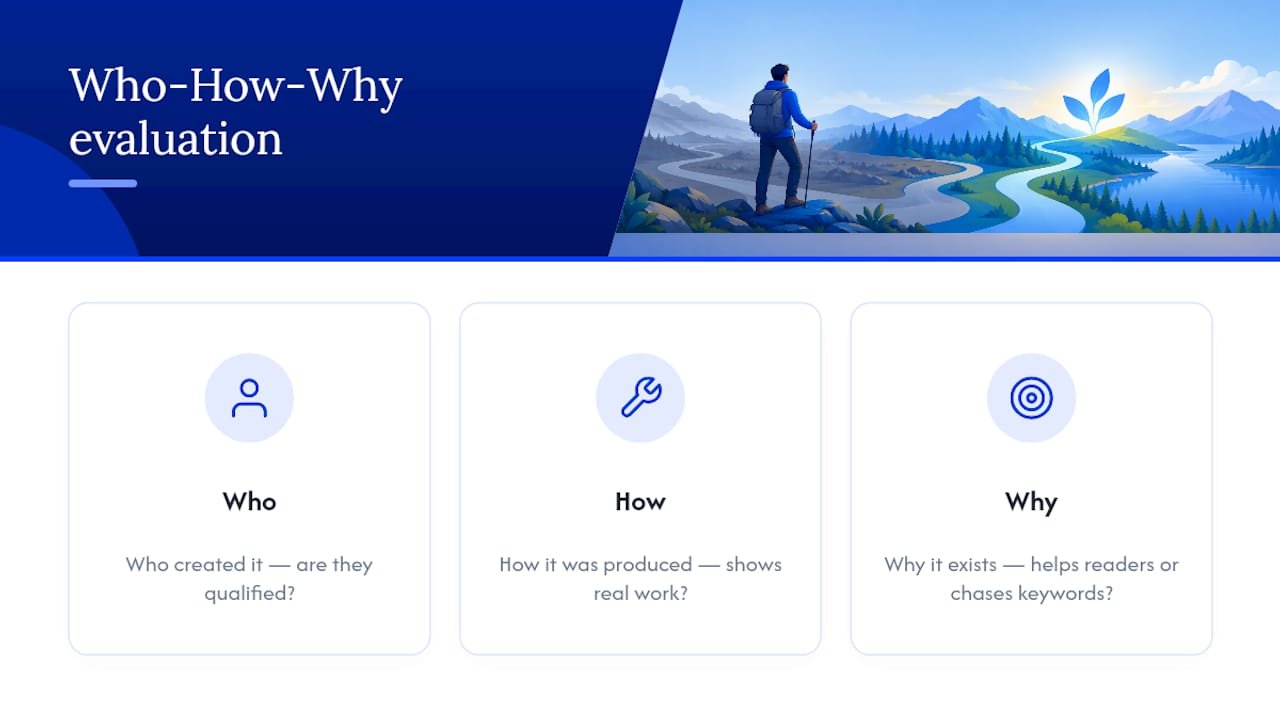
The evaluation runs on what Google calls the Who, How, and Why framework. Who created this content, and are they qualified to speak on it? How was it produced, and does that process show real work? Why does it exist, to serve a reader or to catch a keyword? These questions overlap heavily with the spam policies on scaled content abuse, which specifically call out using automation to mass-produce pages with no meaningful oversight.
That last point causes confusion. Google’s own guidance says AI and automation are fine when they help you create genuinely useful content, and it recommends disclosing automation when it materially contributed to what a reader sees, per Google’s people-first content guidance. The line isn’t AI versus no AI. It’s whether a human with actual expertise shaped the result or just hit publish on a template.
For affiliate marketers, the practical takeaway is this: there’s no submit-for-review button. Google’s own announcement confirms the classifier runs continuously, so recovery happens as your site’s patterns actually change, not on a schedule you control.
Why Affiliate Sites Took the Hardest Hit
Affiliate publishers absorbed a disproportionate share of the damage, and the reasons are specific, not mysterious. Thin affiliation is the biggest one: a page that lists five products with a paragraph of rewritten specs and no evidence the writer ever touched the product. Templated reviews are the sibling problem, the same five headers (“Pros,” “Cons,” “Who It’s For”) repeated across two hundred posts with only the product name swapped out.
Industry analysis from Lily Ray’s reporting for Impact found that publishers leaning hard on ad revenue and affiliate links suffered the steepest traffic losses, precisely because those business models incentivize volume over depth. More pages, more links, more ad slots. Fewer reasons for Google to trust any single one of them.
Four site-level signals show up again and again in affected sites:
- Content velocity that outpaces effort. Dozens of new posts a month with no proportional increase in original research or testing.
- Ad density stacked above the fold. Readers hit three ad units before reaching a sentence of actual advice.
- No visible author identity. Bylines missing entirely, or attributed to a generic “Editorial Team” with no bio.
- Affiliate link density that overwhelms the text. Paragraphs that exist mainly to connect one outbound link to the next.
The mechanism behind the damage is sitewide, not per-page. HCU functions as a domain-level classifier: when a meaningful share of a site’s URLs get flagged as unhelpful, it can suppress ranking potential for the rest of the domain, even the pages that are genuinely good, according to analysis from EarnifyHub. Audits across affected sites suggest that once a substantial share of indexed content is low-value, domain-wide suppression becomes far more likely. One bad section can drag down an otherwise solid site.
How to Audit and Triage Every Affiliate Page
Before you fix anything, you need a spreadsheet, not a gut feeling. Export every indexed URL and pull these fields for each one:
- URL and publish date
- Word count
- Last-updated date
- Affiliate link count
- Presence of original images, screenshots, or video
- Backlinks (even a rough count from any crawler)
- Impressions and clicks, before and after the last several core updates
- Conversions or affiliate earnings, if you track them
Once the sheet is built, score every page red, yellow, or green using a combined signal, not any single metric in isolation. A composite scoring approach like this, drawn from practical audits of affected affiliate domains, tends to work well:
- Red: Under 800 words, no original media, no updates in over a year, and a visible traffic cliff after a core update. Delete or noindex.
- Yellow: Decent word count or some original media, but missing one or two trust signals (no author bio, thin affiliate disclosure, stale pricing). Consolidate into a stronger page or schedule for an upgrade.
- Green: Original testing, current data, clear authorship, and stable or growing impressions. Keep, expand, and use as a template for what “good” looks like on your site.
The EarnifyHub audit framework recommends flagging anything that scores red on three or more signals for immediate removal rather than a slow rewrite queue. Running this kind of export manually across a few hundred URLs is tedious. If you want to speed the process, a guide on running AI-assisted SEO audits walks through prompting workflows that generate prioritized fix lists straight from a crawl export.
Pro Tip: Sort your export by impressions lost, not traffic lost. A page that dropped from 40 impressions to 5 tells you less than a page that dropped from 4,000 to 400, even if the raw traffic numbers look small on the first one.
The Recovery Roadmap: What to Do Month by Month
Recovery isn’t a single fix. It’s a sequence, and skipping steps to rush toward “rebuild everything” is the single most common mistake publishers make. Here’s the order that actually works, based on patterns across recovered affiliate sites documented by GODRANK’s recovery analysis.
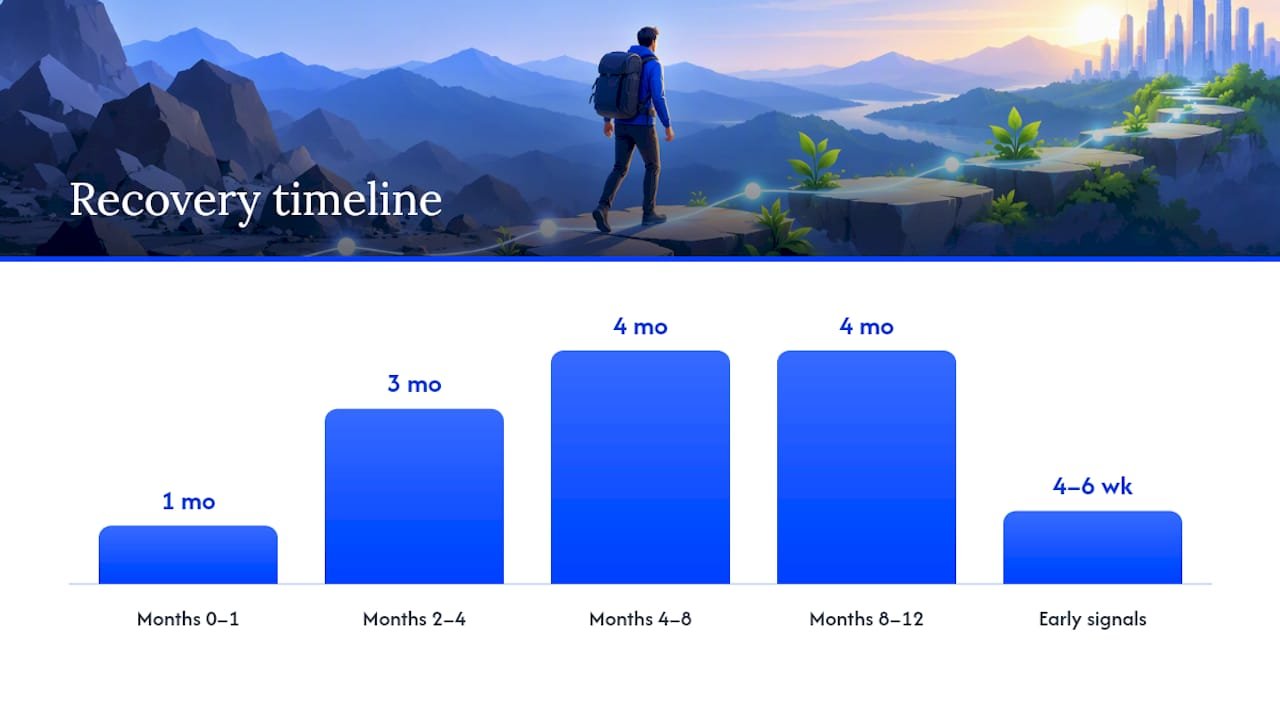
Months 1 to 2: Triage.
This phase is about subtraction, not addition. Pull your red-scored pages from the audit and act:
- Delete or noindex confirmed thin, templated, or duplicate-intent pages.
- Fix the most glaring UX problems, especially stacked ad units above the fold.
- Stop publishing anything that follows the old templated format, even if it’s already in your content calendar.
This step alone often produces the first measurable shift, because you’re removing the weight that was dragging down the rest of the domain.
Months 2 to 4: Deepen.
Now you rebuild what’s worth keeping. Every surviving page needs evidence of first-hand work: screenshots you took yourself, pricing you verified this week rather than copied from a spec sheet a year ago, and a short methodology section explaining how you actually tested or evaluated the product. This is also where you build out “how we tested” pages that anchor your credibility across multiple related posts.
Months 4 to 8: Rebuild structure.
With individual pages strengthened, shift attention to how they connect. Group related content into topical hubs instead of scattered one-off posts, and clean up internal linking so anchor text reads naturally instead of stuffed with exact-match keywords. A resource on building topical authority for affiliate sites covers how to structure these hubs without over-optimizing anchors in the process. This is also the window to fix Core Web Vitals issues and add consistent author and brand signals sitewide.
Ongoing: Measure weekly, judge monthly.
Check Search Console weekly for impressions and click trends on the URLs you touched. Early positive signals, small impression bumps on updated pages, usually show up within four to six weeks of a deepening pass. Partial recovery across a site is realistic in the 3 to 4 month range according to GODRANK’s case analysis, with fuller recovery for comprehensively rebuilt sites landing closer to 8 to 12 months. Do not judge success on a single week of data. HCU-related recoveries move in a slow climb, not a jump.
The E-E-A-T Signals Worth Adding Right Now
Google’s guidance is explicit that the “Who” question matters: readers and Google’s systems both want to know who created a piece of content and whether that person has real standing to write it, according to Google’s people-first content documentation. For affiliate pages, that translates into a short list of concrete additions.
- Visible author bylines linking to an indexed author page with a real bio, relevant experience, and a photo, not a stock headshot.
- “How we tested” sections that state the test dates, the number of units or devices used, the exact steps taken, and at least one original photo or screenshot. A vague sentence like “we researched this thoroughly” convinces nobody, human or algorithm.
- Plain-language affiliate disclosures placed near the top of the content, not buried in a footer. “We may earn a commission if you buy through links on this page, at no extra cost to you” beats any legal boilerplate.
- AI disclosure where it’s warranted. If automation materially shaped a draft, say so briefly. Google’s own guidance treats this as good practice, not a confession.
Concrete examples of disclosure wording and placement are collected in this guide to affiliate disclosure examples, which is worth bookmarking as you rebuild pages in batches.
Pro Tip: Write your “how we tested” section before you write the rest of the review. It forces you to actually do the testing first instead of retrofitting credibility onto a page you already wrote from a spec sheet.
Fixing the Technical and UX Signals That Quietly Hurt You
Content quality gets most of the attention, but user experience carries real weight in how Google interprets helpfulness, and it’s often the faster fix. One documented pattern from recovered sites: reducing ad density above the fold appears to have been a direct cause of recovery in some cases, not just a correlated detail, per GODRANK’s findings.
Start with these:
- Move affiliate links and ad units below the point where a reader gets real value, not stacked before a single sentence of advice.
- Cap ad units above the fold at one, ideally zero on mobile.
- Run a Core Web Vitals check and fix the worst offenders first, usually oversized images and unoptimized third-party scripts from ad networks.
- Use foundational schema types, Product, Review, Organization, and Person, rather than leaning on FAQ markup, since Search Engine Journal reported that FAQ rich result support was reduced.
Schema helps Google parse your page correctly. It does not substitute for the first-hand content that actually earns trust.
What Recovery Actually Looked Like for Publishers Who Fixed It
Publishers who combined page-level pruning with structural changes saw the clearest gains. Sites that removed a large share of thin, templated pages while simultaneously adding original testing, author identity, and reduced ad density reported measurable traffic recovery within a 3 to 9 month window, per case data compiled by GODRANK.
- Author pages and bylines added sitewide, not just on flagship posts.
- Internal linking rebuilt around topical hubs instead of scattered keyword-targeted pages.
- Ad density reduced specifically above the fold, even before content rewrites were finished.
Publishers who tried surface fixes only, swapping in a new template or adding a generic disclaimer without touching the underlying thinness, generally saw no meaningful movement. The pattern is consistent: partial effort produces partial or no results.
Your Copy-Paste Audit and Template Checklist
Keep this list next to your spreadsheet as you work through triage.
One-page audit checklist:
- URL, word count, last-updated date pulled for every indexed page.
- Affiliate link count and original media presence flagged per URL.
- Impressions and clicks compared across the last two to three core updates.
- Red/yellow/green score assigned using the combined-signal rubric.
- Action assigned: delete, noindex, consolidate, or expand.
Author bio template fields:
- Full name and photo
- One line of relevant niche experience (“Tested budget cameras for six years”)
- A short credential line if applicable
- Link to an indexed author archive page
“How we tested” template fields:
- Scope of the test and sample size
- Test dates
- Steps taken, in order
- Specific results, with numbers where possible
- Publication date and an automation disclosure note if AI materially contributed
Lessons From Coaching Affiliate Publishers Through HCU
The publishers who recover are the ones who resist the urge to chase a quick fix. Slow, sequenced remediation, triage before deepening, deepening before restructuring, consistently outperforms scrambling to rewrite everything at once. AI has a real role here: it can speed up audits and help you draft methodology sections faster, but only when a human still supplies the actual testing and judgment behind the words. The publishers who treat AI as a research assistant recover. The ones who treat it as a content factory usually don’t.
— Will
How Willbuckley Helps You Run This Playbook Without Guesswork
Running a full sitewide audit by hand, page by page, is the part most affiliate marketers stall on, not because the steps are unclear but because the manual labor eats weeks you don’t have. There are AI-assisted workflows built for affiliate marketers that provide repeatable prompt-driven processes for triage, content deepening, and disclosure writing fitting into the recovery roadmap above.

If you’re rebuilding your audit process from scratch, the AI affiliate workflows collection has ready-to-run recipes for exactly the triage and scoring steps covered here. And if your content strategy needs a full reset rather than a patch job, the 90-day AI content strategy rollout lays out a phased plan you can adapt to your own recovery timeline. Start with either page, pick the workflow that matches where your site stands right now, and get moving on the fixes that actually count.
Sources
Go straight to Google’s people-first content guidance and the March 2024 core update announcement for primary-source detail on E-E-A-T and spam policy scope. For a practical workflow template you can adapt for content refreshes, the SEO content update workflow guide is a solid companion to the audit steps above. Pair both with your own Search Console exports and a Core Web Vitals check before drawing conclusions about your site.
- March 2024 core update (Google Search Central blog)
- Google’s Helpful Content Update: What Hit, What Recovered, and Why | GODRANK
- Google’s Unhelpful Content Update: A Reckoning for Publishers (Impact)
- Google drops FAQ rich results from search (Search Engine Journal)
FAQ
What Is Google’s Helpful Content Update?
It’s a ranking system, launched in August 2022, that identifies content created primarily to rank in search rather than to serve readers. Google merged it into core ranking systems in March 2024, making helpfulness a continuous sitewide signal instead of a periodic check.
What Is the 80/20 Rule in SEO?
There’s no official Google standard called the “80/20 rule” tied to the Helpful Content system.
What Are the E-E-A-T Principles?
E-E-A-T stands for Experience, Expertise, Authoritativeness, and Trustworthiness, the qualities Google’s raters and systems look for when judging content quality. It ties directly to the Who, How, and Why framework in Google’s people-first content guidance, which asks whether content shows real first-hand experience and a credible creator.
What Are Google’s Guidelines for Helpful Content?
Google recommends content that demonstrates first-hand experience, clear authorship, and a purpose beyond ranking for a keyword. The official guidance specifically advises disclosing significant use of automation when it materially shaped what a reader sees.
How Long Does Helpful Content Update Recovery Take for Affiliate Sites?
Partial recovery often shows up within 3 to 4 months of consistent remediation, with fuller recovery for comprehensively rebuilt sites landing closer to 8 to 12 months, based on case analysis of recovered affiliate domains. There’s no fixed timeline since the classifier evaluates sitewide patterns continuously rather than on a review cycle.