
If you want the most striking, polished images and you don’t mind learning a tool, Midjourney is the better pick. If you want to describe an image in plain English, get readable text and exact instructions followed, the DALL·E approach inside ChatGPT is easier. One thing has changed since most comparisons were written: DALL·E 3 itself has been retired, so the real choice today is Midjourney against OpenAI’s newer image models in ChatGPT.
Have you ever spent an hour on a thumbnail or an ad image and still felt it looked flat? That is usually where this question starts. Below, we walk through how the two compare on quality, text, editing, privacy, cost and workflow, so you can choose in a few minutes and get back to promoting your offers.
TL;DR
- Midjourney wins on aesthetics, style range and creative control. Independent tests keep finding its images the most visually rich and cinematic.
- The DALL·E side wins on prompt accuracy, readable text and ease of use, because it lives inside a chat window.
- DALL·E 3 was scheduled to shut down on May 12, 2026, and OpenAI’s docs now point developers to its newer GPT Image models.
- Midjourney has no free tier and starts at $10 a month. ChatGPT Plus is $20 a month and includes image generation.
- Many marketers get the best results by using both: Midjourney for mood and hero visuals, ChatGPT for quick, literal graphics with copy.
Table of Contents
- First, what happened to DALL·E?
- Image quality and style
- Prompt accuracy: who does what you actually asked?
- Text inside images
- Editing and creative control
- Ease of use and privacy
- What each one costs
- Which one fits which job?
- A quick way to choose
- How this plays out for affiliate marketers
- Our perspective
- Want a ready-made workflow?
- FAQ
- Sources
First, what happened to DALL·E?
People often ask whether DALL·E is being discontinued, and the short answer is yes for DALL·E 3. OpenAI’s community team posted a reminder that DALL·E 2 and DALL·E 3 would be shut down on May 12, 2026, and suggested its newer GPT Image models as replacements. OpenAI’s developer documentation now lists DALL·E 3 as shut down and removed from the API.
Who owns DALL·E? OpenAI, the company behind ChatGPT, built it. When OpenAI introduced DALL·E 3, it said the model was designed to decline requests for public figures by name and for images in the style of a living artist, and that creators could opt their images out of training future models. Those guardrails still shape how ChatGPT image generation behaves.
So why does everyone still search for “Midjourney vs DALL·E”? Because the name stuck. Most of the head-to-head tests you will find were run on DALL·E 3, and their lessons still describe how the two philosophies differ: Midjourney chases beauty and control, while OpenAI’s tools chase accuracy and convenience. We use “DALL·E” in this article to mean that OpenAI approach, and we flag where a result came from DALL·E 3 specifically.
Image quality and style
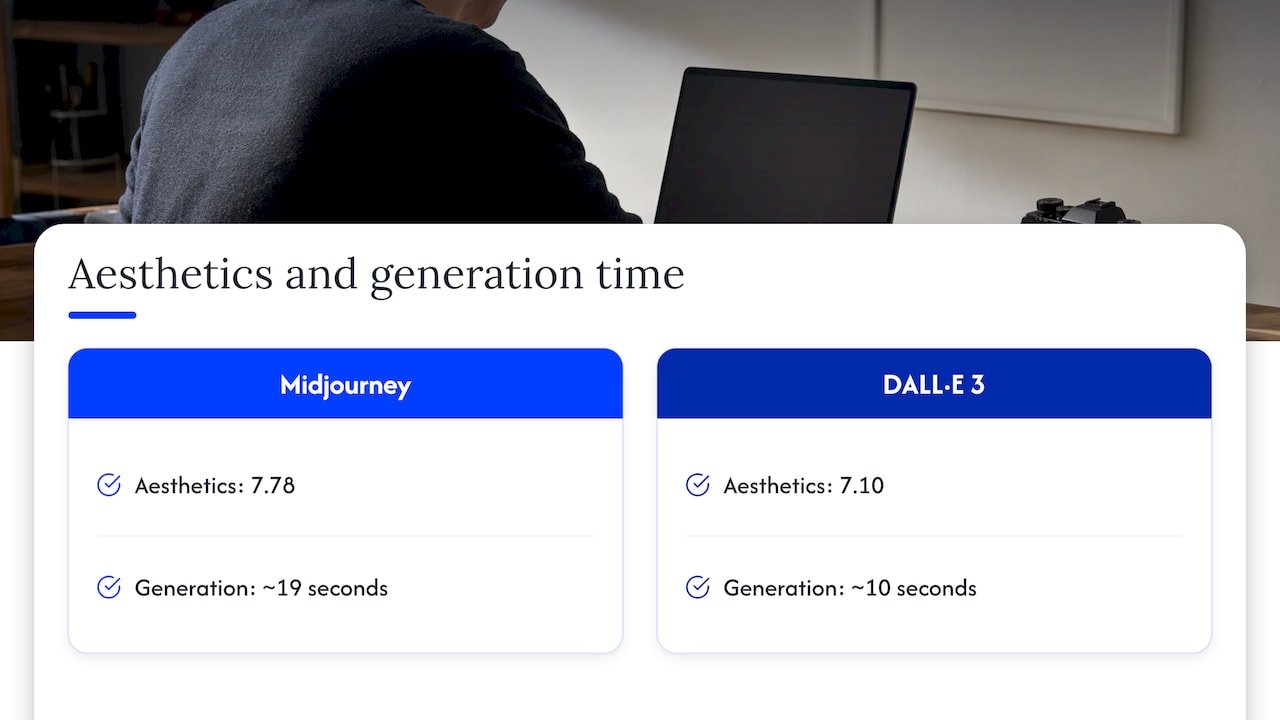
Midjourney has a look, and most people love it. It leans painterly, cinematic and dramatic, even when you don’t ask for drama. A peer-reviewed study in the journal AI & Society compared Midjourney, DALL·E 3 and GPT-4o across 180 illustrations. Midjourney scored highest on aesthetics, 7.78 against 7.10 for DALL·E 3, and it also had the lowest FID score, a measure of how close generated images sit to real ones. The same authors concluded that no single model dominates every part of illustration, which is the most honest summary of this whole debate.
TechRadar ran a five-prompt head-to-head and found Midjourney’s results slightly more well-rounded and accurate overall. It also noted that getting four images per prompt gave users more confidence than a single image. DALL·E was quicker in that test, at about 10 seconds against about 19.
The cinematic bias cuts both ways. If you want a moody lifestyle shot or a dramatic hero banner, it is a gift. If you want a plain, slightly messy, real-looking photo, you may have to push against it. Think of Midjourney as an art director with strong taste: the results are beautiful, and sometimes beautiful in a direction you didn’t ask for.
On resolution, Midjourney’s V8.2 produces 1024×1024 images by default and 2048×2048 in HD mode, which is plenty for blog headers, social posts and ad creative.
Prompt accuracy: who does what you actually asked?
This is where the OpenAI approach shines. G2 tested a deliberately tricky prompt: a cat riding a unicorn in a neon-soaked Tokyo street. DALL·E 3 got all four images right, while Midjourney’s unicorn turned into a unicorn-cat hybrid or a plain horse. The AI & Society study agrees: DALL·E 3 and GPT-4o did better at keeping semantic structure and following prompts faithfully.
Midjourney tends to interpret your prompt rather than obey it. That is wonderful when you are exploring and frustrating when you have a tight brief, like “a woman holding a blue laptop, white background, space on the left for a headline.”
A simple rule helps. If your brief is a mood, use Midjourney. If your brief is a checklist, use the chat-based tool.
Text inside images
If your graphics carry words, this section may decide everything. In the academic study, GPT-4o and DALL·E 3 rendered crisp, correct text suitable for labels, posters and infographics, while Midjourney showed frequent errors and distortion. Newer Midjourney versions have improved, but longer phrases are still the weak spot in most reviews.
For affiliates, that matters in everyday jobs: a discount badge, a “Top 5 picks” graphic, a pinned-post image with a headline. The practical workaround is to generate the picture in Midjourney and add the words afterward in a design tool, so the text is always sharp. If you would rather skip that step, the ChatGPT route handles short headlines much more reliably.
Editing and creative control
Midjourney has grown into a more serious editing tool. Its current default model, V8.2, became the default on July 24, 2026, and brings an Edit Model that replaces the older Omni Reference, Character Reference and Retexture tools. According to Midjourney’s own updates page, the Edit Model can edit images with instructions, use up to four image references, change specific areas and expand the canvas, and it works with personalization, moodboards and style references.
That last group is gold for anyone building a consistent brand look. Style references let you lock a visual identity so that fifty images across your site feel like one family.
G2 found Midjourney’s editing controls more flexible, with DALL·E 3’s inpainting more limited. Where ChatGPT does well is conversational refinement: you type “make the background warmer” or “remove the second cup,” and it tries again. That is less precise but far more approachable.
One more difference is content policy. In a hands-on test, HowToGeek found that ChatGPT with DALL·E 3 refused copyrighted characters and living artists’ styles, while Midjourney was more permissive. That test dates from 2023, and policies change, so read each tool’s current rules. For anyone promoting offers, the safe habit is the same either way: don’t imitate a real person’s work or a protected character in commercial images.
Ease of use and privacy
G2 summed up the access difference this way: DALL·E is integrated into ChatGPT on web and mobile and is easier to start with, while Midjourney offers more hands-on control. Midjourney now has a web interface alongside Discord, so you no longer need to learn a chat server to use it, but you do still need to learn how its prompts, parameters and references behave.
Privacy is the part many beginners miss. G2 notes that Midjourney is public by default: your images appear in the community gallery unless you are on a Pro or Mega plan with Stealth Mode. Images made in ChatGPT stay private automatically. If you are working on a campaign for a client or testing a new niche, that is worth knowing before your first prompt.
What each one costs
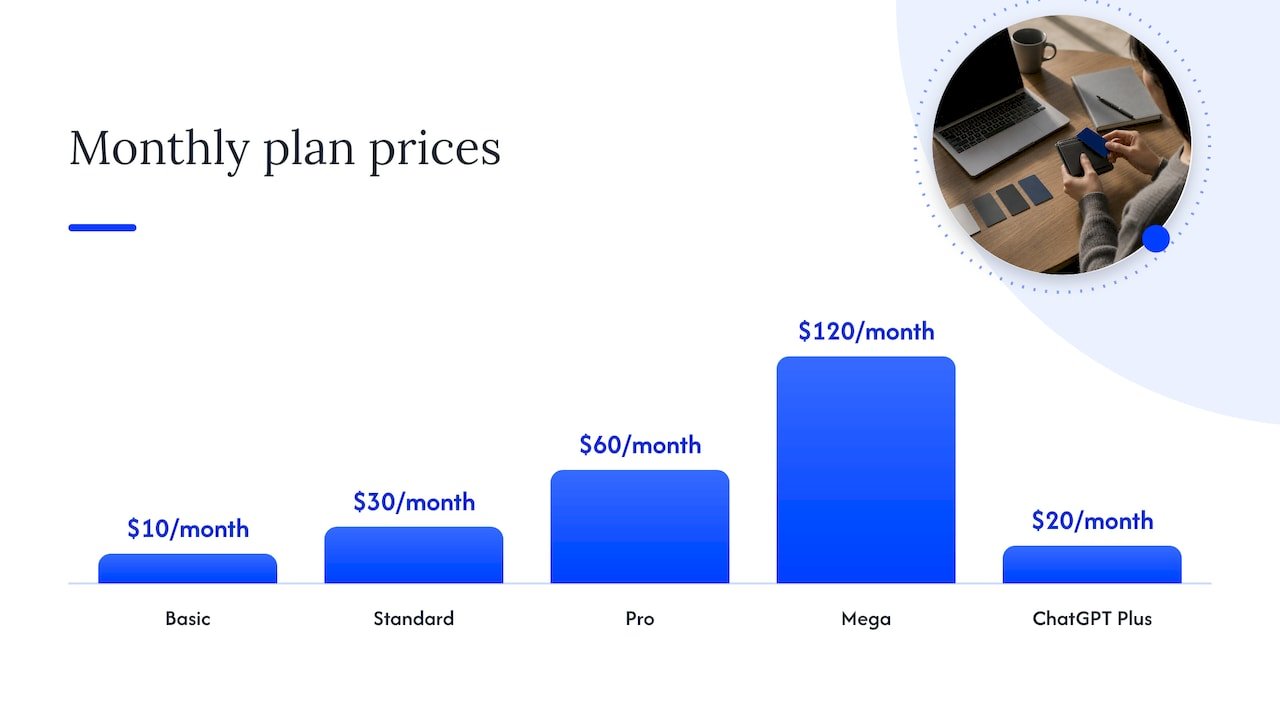
Midjourney has no free tier. Its official pricing page lists four plans: Basic at $10 a month, Standard at $30, Pro at $60 and Mega at $120, with 20% off when you pay annually. Per Midjourney’s plan comparison, Basic includes 3.3 hours of Fast GPU time, Standard includes 15 Fast hours and unlimited Relax images, and Pro and Mega add Stealth Mode. Midjourney explains that an image prompt uses about a minute of GPU time, and Relax mode queues your job with typical waits of 0 to 10 minutes.
On the OpenAI side, image generation is bundled with ChatGPT. SaaSCompared lists ChatGPT Plus at $20 a month, with API access priced per image for developers. Limits and prices change often, so check the current plan page before you subscribe.
| Midjourney | OpenAI image tools in ChatGPT | |
|---|---|---|
| Starting price | $10/month (Basic) | Included with ChatGPT Plus at $20/month |
| Free option | None | Limited, depending on plan |
| Best at | Style, mood, cinematic polish | Accuracy, text, plain-English prompts |
| Editing | Edit Model, inpainting, outpainting, references | Conversational edits |
| Privacy | Public unless Pro or Mega with Stealth | Private by default |
| Learning curve | Moderate | Very low |
Commercial use deserves a quick note. Midjourney says that anyone who has subscribed at any point can use their images and videos in just about any way, but companies with more than $1,000,000 in annual gross revenue must buy the Pro or Mega plan. Most solo affiliates are nowhere near that line, but it is good to know if you ever work with a larger brand.
Which one fits which job?
Here is how we would match tasks to tools if you were sitting next to us.
Reach for Midjourney when you want hero images, mood boards, concept art, brand campaign visuals, photoreal lifestyle shots or high-volume exploration. Its Relax mode on Standard and above makes it a comfortable place to try fifty variations without watching a meter. It also does video, which the OpenAI image tools don’t, since OpenAI keeps video in a separate product.
Reach for the ChatGPT route when you need social graphics with words on them, blog illustrations with a specific literal brief, quick iterations while you are already writing in ChatGPT, or diagrams and storyboards where structure matters more than style.
G2’s reviewer put it well: these tools are best when used together, with Midjourney for storytelling and high-impact visuals and the chat-based tool for quick iteration and cleaner structure. If you only pay for one, pick based on your most common job, not the occasional special one.
A quick way to choose
Ask yourself three questions. Do your images need readable words? If yes, lean toward ChatGPT. Do you care more about a distinctive, repeatable look than about literal accuracy? If yes, lean toward Midjourney. Do you already pay for ChatGPT? If yes, you can start making images today at no extra cost, and add Midjourney later when you hit the ceiling of what you want to create.
Brand consistency is a deciding factor that people underestimate. Your audience remembers a look more than a single image, and a clear visual branding approach for freelancers makes everything you publish feel more trustworthy. Midjourney’s style references are built for that kind of consistency. For one-off graphics, convenience usually wins.
Time matters too. Anything that trims repetitive creative work, like the productivity gains AI brings to agencies, frees you to spend more hours on offers, audience and testing, which is where affiliate income actually comes from.
How this plays out for affiliate marketers
Imagine you run a review site and a YouTube channel. Your thumbnails need drama and a consistent look, so Midjourney with a saved style reference makes sense. Your comparison-table graphics need exact words, so you make them in ChatGPT or add the text in your design tool. Your email header needs a warm, simple image in five minutes, so whichever tool is already open wins.
If ad creative is where you spend most of your image budget, our guide to what works and what backfires in AI ad creative shows how to put these images into a testing workflow. And if you are still weighing the wider field, our roundup of the best AI image generators for every use case covers more options by type.
Our perspective
Here is what I have seen after years of teaching and coaching: the tool is rarely the thing holding people back. The thing holding them back is the hour they lose deciding, comparing and second-guessing before they publish anything.
So we keep it simple. Pick the tool that matches your most common job, make ten images this week, and use them in real content. If you need a look people recognize, Midjourney’s style control is hard to beat. If you need speed and accurate words, the ChatGPT route gets you there with almost no learning curve.
Our approach at Willbuckley is practical and AI-driven: use these tools to save time, not to add another complicated task to your day. Pair a good image with a clear offer and an honest message, and you are already ahead of most people who are still comparing feature lists.
Will
Want a ready-made workflow?
Choosing an image tool is only the first step. The bigger win comes from building it into a repeatable routine for your content and offers. Our AI affiliate workflows page gives you ready-to-run recipes that show where image generation fits alongside writing, video and analytics, so you spend less time on setup and more time publishing.
If you are just starting out, our guide to launching AI affiliate marketing in 30 days walks you through it step by step, and you can find more tips and coaching content on the Willbuckley home page.
FAQ
Is Midjourney better than DALL·E?
For visual beauty, style range and creative control, most independent tests favor Midjourney. For following instructions exactly and rendering readable text, the OpenAI approach usually does better. The right answer depends on whether your priority is the look of the image or the effort it takes to get one.
Is DALL·E being discontinued?
DALL·E 3 was scheduled to shut down on May 12, 2026, and OpenAI’s documentation now lists it as removed from the API. Image generation continues in ChatGPT through OpenAI’s newer GPT Image models, so you can still get the same easy, chat-based experience.
Is DALL·E free?
There is no permanent unlimited free option. OpenAI’s image tools are included with ChatGPT plans, with limits that depend on the plan, and Midjourney has no free tier at all. Check the current plan pages for exact limits, since they change.
Which is cheaper, Midjourney or DALL·E?
Midjourney starts at $10 a month for Basic, while ChatGPT Plus is $20 a month and covers much more than images. If you already pay for ChatGPT, generating images costs you nothing extra. If you make a lot of images, Midjourney’s Standard plan with unlimited Relax generations at $30 a month can be very good value.
Can I use the images commercially?
Midjourney says subscribers can use their images and videos in nearly any way, with the Pro or Mega plan required for companies earning over $1,000,000 a year. For ChatGPT images, read OpenAI’s current terms. In both cases, avoid copying living artists or protected characters in anything you sell or promote.
Sources
- OpenAI community: DALL·E shutdown reminder
- OpenAI developer docs: DALL·E 3
- OpenAI: DALL·E 3 announcement
- AI & Society study comparing GPT-4o, DALL·E 3 and Midjourney
- TechRadar: Dall-E vs. Midjourney head-to-head
- G2: Midjourney vs. DALL·E test
- Midjourney docs: Upscalers
- Midjourney docs: Version
- Midjourney: Updates
- HowToGeek: Midjourney vs. DALL-E 3 prompt battle
- Midjourney: Pricing and plans
- Midjourney docs: Comparing plans
- SaaSCompared: Midjourney vs DALL-E 2026