

Claude is one of the best AI assistants you can pick for marketing work that depends on words: long-form content, email, briefs, positioning and analysis. It is not the best at everything, and it will not fix a weak strategy. But if you feed it real evidence, give it your brand voice and turn your best prompts into reusable routines, it can take hours out of your week. This guide shows you how, with an affiliate marketer’s eye on what actually earns commissions.
TL;DR
- Claude is strongest at long-form writing, consistent brand voice and multi-step reasoning. Other chatbots tend to win on image generation and rapid-fire variations.
- The biggest quality jump comes from giving Claude evidence (real ads, customer language, your best posts) before you ask it to write.
- Organize your work: one central brand project for style and identity, with separate projects for SEO, email and paid media.
- Turn prompts that work into named, reusable Skills so you stop rewriting the same instructions.
- Keep a human in the loop for facts, disclosures and final edits. That is where trust, and commissions, are won or lost.
Table of Contents
- Why marketers are paying attention to Claude
- What Claude does best (and where it doesn’t)
- Set up Claude so it sounds like you
- Turn good prompts into reusable Skills
- Claude for affiliate marketing: four workflows to try
- Go beyond chat: connectors and agentic work
- What it costs
- Where Claude falls short
- Our perspective
- Want a hand putting this into practice?
- FAQ
- Sources
Why marketers are paying attention to Claude
Have you ever opened a blank document, stared at it for twenty minutes and then closed it again? Most of us have. Marketing is a stack of small writing and thinking jobs, and each one has a way of sneaking up on your day. That is the real appeal of an assistant: not magic, just less friction.
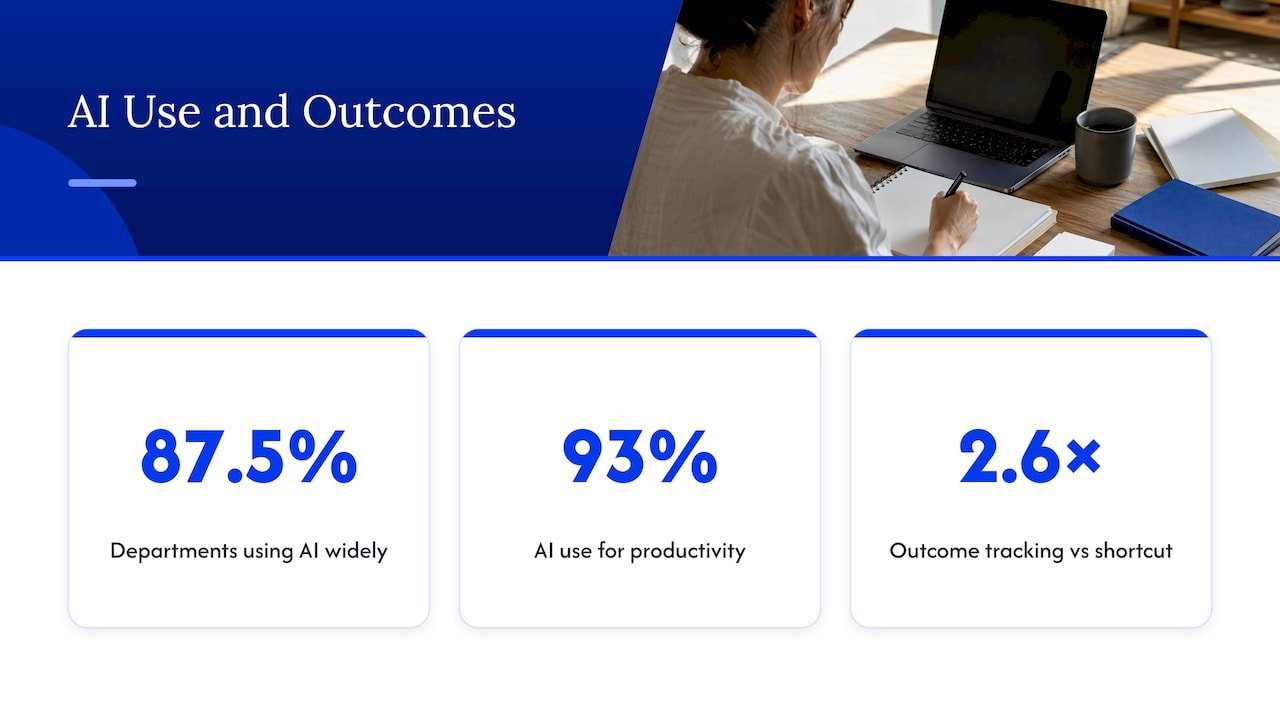
You are also not alone in using one. A study of 96 martech and marketing operations leaders found that 87.5% said stand-alone AI assistants are now widely used in their departments. The question is no longer whether to use one. It is how to use it well enough that the output sounds like you and moves a number you care about.
That gap between using AI and using it well is real. Fluvio’s 2025 research found that 93% of product marketers use AI for productivity, yet teams with a centralized AI strategy were 2.6 times more likely to track measurable outcomes than those treating it as a personal shortcut. If you work solo, you are your own centralized strategy. Write down what you want Claude to do, and measure whether it helped.
What Claude does best (and where it doesn’t)
A fair comparison helps you spend your time wisely. According to HubSpot’s marketer’s comparison, Claude is consistently praised for long-form content, brand voice consistency and complex reasoning, while the other leading chatbot is often preferred for native image generation, quick ideation and high-volume transactional copy.
In plain terms, here is how that plays out in a typical week:
| Task | Where Claude shines | Where another tool may serve you better |
|---|---|---|
| Long articles and reviews | Holds a long brief and keeps a steady voice | Quick outlines you will rewrite anyway |
| Email sequences | Natural tone, fewer stock phrases | Dozens of subject-line variations in seconds |
| Positioning and research | Reasoning across many pasted documents | Visual concepts and image generation |
| Reporting and analysis | Reading data exports and summarizing patterns | Anything needing live image or video output |
Copywriter Brooks Lockett makes a similar point: Claude tends to produce hook-driven, brand-oriented copy that is less jargon-heavy, as long as you give it context and brand guidelines. Notice the condition. Without context, any assistant sounds like every other assistant.
Many marketers end up using two tools, one for depth and one for speed or visuals. If you are weighing the two, we wrote a side-by-side look at which assistant creators should pick. For a wider view of how different AI assistants suit different business tasks, this overview of what Claude can do for a business is a useful second opinion.
Set up Claude so it sounds like you
The fastest way to disappoint yourself is to type “write me a blog post about X” into a fresh chat. You will get something competent, smooth and forgettable. The setup below takes about an hour and pays you back every week.
Build one brand project first
Create a central project that holds your identity: who you write for, how you sound, words you never use, a few of your best posts, and the disclosure language your affiliate programs require. Experienced users keep one central brand project for core identity documents and style guides, then separate sub-projects for functions like paid media, SEO and email. That separation stops conflicting instructions from muddying the output and keeps each workspace focused.
A practical split for an affiliate marketer might be a brand project, one for reviews and comparison posts, one for email, and one for video scripts. Each gets only the material it needs.
Feed it evidence, not just instructions
This is the habit that changes everything. The advice from AdLibrary’s guide to using Claude for marketing is to paste in real material, such as competitor ads, customer interviews or successful posts, and tell Claude to extract patterns or reuse the exact language, instead of generating from scratch. Grounding it in real text reduces both invented details and that stiff, “AI-sounding” feel.
For affiliates, evidence might be your own notes from testing a product, screenshots of features, a list of reader questions from your inbox, or the program’s official terms. We go deeper on this in why the evidence pack comes first for affiliate content.
Write a short brief every time
Even with a good project, each task needs a brief: the audience, the goal, the angle, the length and the one action you want the reader to take. If you want ready-made structures, our AI brief templates cover the common jobs, and our guide to prompt engineering workflows for affiliates shows how to cut draft time without cutting quality.
Turn good prompts into reusable Skills
Here is a quiet trap: you write a brilliant prompt on Tuesday, and by next month you cannot find it. Teams that get the biggest wins tend to stop treating prompts as one-offs. According to Claude Academy’s content repurposing walkthrough, you can turn a successful prompt into a named Skill, a reusable task package you call on demand, which keeps results consistent and saves you from rewriting complex instructions.
Think of a Skill as a recipe card. “Review post from my notes.” “Weekly newsletter from three links.” “Ad performance recap.” Each one holds the steps, the format and your voice rules. If you would rather start smaller, begin by building a prompt library over 30 days and promote your best ten into Skills once they have proven themselves.
Claude for affiliate marketing: four workflows to try
Let’s get concrete. These are the workflows where an assistant tends to save the most time for affiliates, and each can be tested in an afternoon.
Turn one piece of content into many
You record a video or finish a long review. Now you need a post, a newsletter blurb and a few social snippets. Claude Academy describes this exact use case: one webinar becomes a blog post, a LinkedIn thread and short social posts, each in your voice. The trick is to give it a sample of your own writing so each version sounds like you, not like a template. Our roundup of AI content repurposing tools covers what to add if you want automation on top.
Draft reviews and comparisons from your own testing
Paste your hands-on notes, pricing details from the official page and the questions readers ask. Ask Claude to organize them into a comparison with a clear recommendation and honest drawbacks. You supply the experience; it supplies structure and polish. Then you check every claim against the source. If you want the same approach with a different assistant, see our ChatGPT prompts and workflows for affiliate marketing.
Recap performance and decide what to change
Export your numbers and let Claude summarize what moved. Claude Academy’s ad performance recap shows the pattern: a summary, a recommendation on what to improve and a shareable deck. Treat the recommendation as a hypothesis, not a verdict. For the bigger picture on measurement, read what AI marketing analytics means for your campaigns, and if you are unsure which touchpoint deserves credit for a sale, our guide to affiliate attribution models will help.
Understand the competition
Give Claude competitor pages, reviews and your own positioning and ask where you win, lose or draw. Claude Academy has a competitive comparison walkthrough where Cowork reads competitor materials against your positioning and outputs a deck and a matrix. For an affiliate, this is a sharp way to find the angle a program page never mentions.
Go beyond chat: connectors and agentic work
Once chat feels comfortable, the next step is letting Claude act across your tools. Anthropic’s own marketing operations team describes using Claude Cowork to automate reporting and campaign builds, and the research behind this guide notes setups where a two-day manual task shrank to about two hours. Treat that as the upper end of what a well-built process can do, not a promise for your first week.
Most solo affiliates do not need a full agentic stack. You need two or three repeatable routines that run reliably. Our guides on AI workflow automation for affiliate marketers and ready-to-run AI affiliate workflows show how to build them one step at a time, so you automate what is already working instead of automating chaos.
What it costs
Plans and limits change, so check Anthropic’s pricing page before you commit. As a rough guide, one third-party comparison lists Claude Pro at $20 a month, with Max tiers at $100 and $200, and notes that Projects are limited on the free tier. For most solo marketers, starting free to learn the workflow and upgrading when you hit limits is a sensible path. Pay only when the time saved clearly beats the bill.
Where Claude falls short
Honesty builds trust, so here are the limits.
It can still be wrong. Any assistant can state a feature, price or commission rate with confidence and be mistaken. Verify every checkable detail against the official source before you publish, especially anything a reader might base a purchase on.
It can still sound generic. Even a good draft needs your stories, your screenshots and your opinion. If you want to polish what comes out, our guide on how to humanize AI content walks through a quick workflow, and our piece on avoiding a Google AI content demotion explains what to watch for.
It does not replace disclosure or ethics. If you promote products, readers deserve to know when you earn from a link. Our guide to EEAT for affiliate sites includes FTC steps and copyable disclosures, and the ethical AI marketing framework maps your practices to recognized standards.
And it will not give you a strategy. Marketing technology researcher Frans Riemersma argues that marketers in the agentic era must shift from efficiency to effectiveness, using AI for strategic decisions and creativity, not only for producing content faster. That is the right frame. Faster junk is still junk.
Our perspective
We have coached and taught for a long time, and the pattern repeats: people do not fail with AI because the tool is weak. They fail because they skip the thinking that comes before the prompt. Who is this for? What do they already believe? What proof do we have? A tool cannot answer those for you, but it can help you act on the answers faster than you ever could alone.
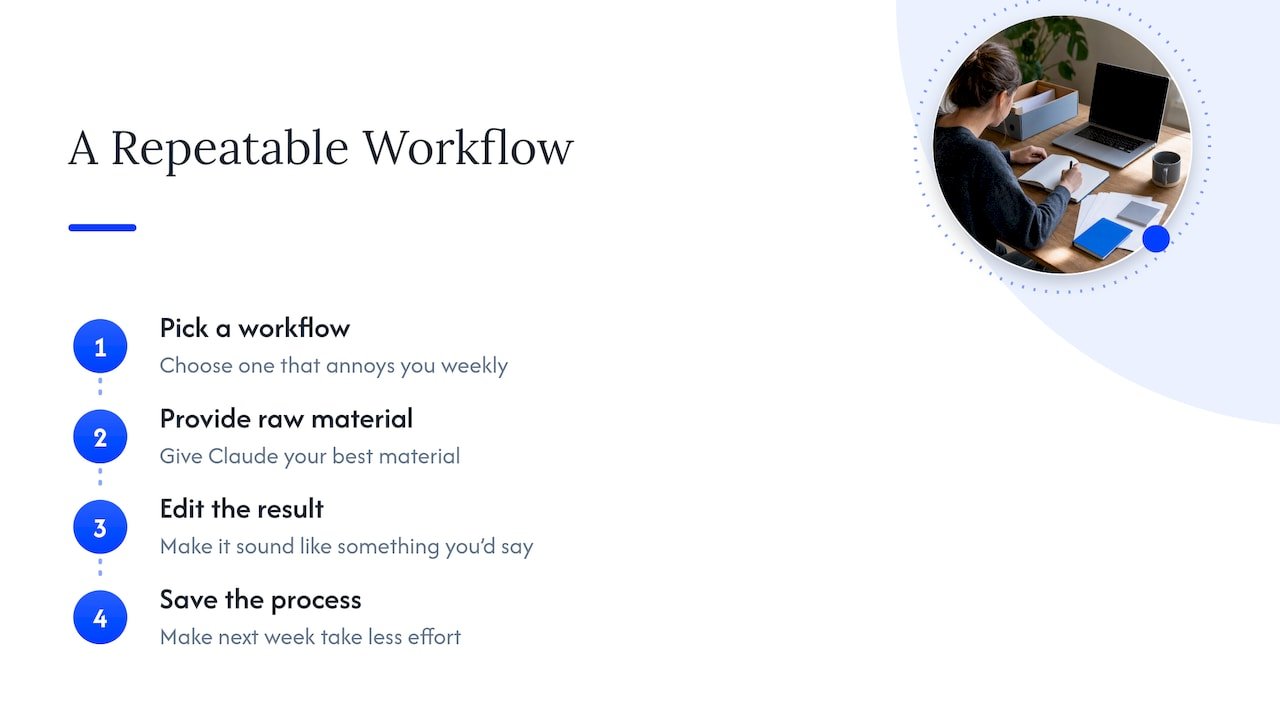
So our advice is simple. Pick one workflow that annoys you every week. Give Claude your best raw material. Edit the result until it sounds like something you would say out loud. Then save that process so next week costs you half the effort. Be patient with yourself in the first month, because the early drafts will feel clumsy, and that is normal. What matters is that each round gets a little better, and that you stay honest with your readers throughout.
— Will
Want a hand putting this into practice?
If you would like a clear path from “I tried a chatbot once” to a working AI workflow, start with our AI content strategy 90-day rollout. It breaks the work into steps you can follow at your own pace, and you can find more coaching, tips and videos for affiliate marketers on our home page.
FAQ
Is Claude good for marketing?
Yes, particularly for long-form content, brand voice consistency and reasoning across lots of material. It is less suited to image generation and very high-volume, throwaway copy. Results depend heavily on the context and evidence you provide.
Is Claude better than ChatGPT for marketing?
It depends on the job. HubSpot’s comparison favors Claude for long-form work and voice, while the other chatbot often wins for images and quick ideation. Many marketers use both and assign each the tasks it handles best.
Can I use Claude for affiliate marketing?
Yes. It works well for reviews drafted from your own notes, email sequences, content repurposing and performance summaries. Always verify product facts and commission terms, and include clear affiliate disclosures.
Do I need to know how to code to use Claude for marketing?
No. Everyday marketing work happens in chat, Projects and Skills, with no coding. Coding-oriented tools exist for building automations, but you can get strong results without them.
Sources
- 2025 product marketing AI trends report (Fluvio)
- Claude vs. ChatGPT: A marketer’s guide to choosing AI (HubSpot)
- ChatGPT vs Claude for Marketing (Datbot)
- How to Use Claude for Marketing (Passionfruit)
- How to Use Claude for Marketing, 2026 Guide (AdLibrary)
- Repurpose content across channels (Claude Academy)
- Recap your ad performance (Claude Academy)
- Build the competitive comparison doc (Claude Academy)
- How Anthropic’s marketing operations team uses Claude Cowork (Claude)
- Claude plans compared (Walma AI)
- 3 actions you must take to thrive in the agentic era of marketing (MarTech)